

Green burial. Water cremation. Human composting. More Minnesotans are asking about natural options at the end of life, and many families aren’t sure what’s available or legal here. In this free webinar from Everbright Legacy Law and Inspired Journeys, mortician, educator and end-of-life doula Angela Woosley, M.A., gives clear, judgment-free answers, and attorney Lauren Fink explains how to put your wishes in writing.
Green burial. Water cremation. Human composting. More Minnesotans are asking about natural options at the end of life, and many families aren’t sure what’s available or legal here. In this free webinar from Everbright Legacy Law and Inspired Journeys, mortician, educator and end-of-life doula Angela Woosley, M.A., gives clear, judgment-free answers, and attorney Lauren Fink explains how to put your wishes in writing.
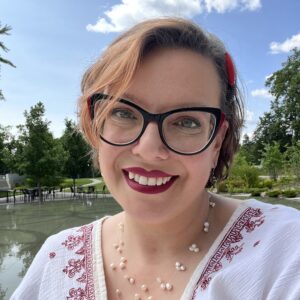
Mortician, educator, end-of-life doula, and celebrant, and founder of Inspired Journeys LLC. Angela formerly taught in the University of Minnesota mortuary science program and brings deep knowledge and warmth to a topic most of us rarely get to explore.
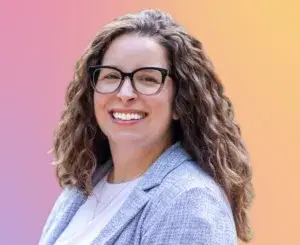
Founder and attorney, Everbright Legacy Law. Lauren hosted the conversation and answered audience questions.
Anyone thinking about their own end-of-life wishes, families helping a loved one plan, and professionals who support families through death and loss.
This transcript was created automatically from the recording and may contain small errors. Times show where each section starts in the video.
0:00 Well, welcome everyone again to the Everbright Legacy Law Lunch and Learn program. I’m Lauren Fink. I’m one of the founders of Everbright Legacy Law. We are an elder law firm, and we’re located in Richfield, Minnesota, and we practice all areas of elder law. And I had the pleasure of meeting and becoming friends with Angela Woosley, and asked her to come and speak today because we so often work with clients on making recommendations for end-of-life planning. And Angela is a mortician. She is an end-of-life doula, and she is the founder of Inspired Journeys. And so often when we think of end of life, we think of some very basic cremation or burial, and that’s about it.
0:54 And there are so many more options that are available. So Angela is joining us today to give us information on the wonderful world of end of life. Thank you so much for having me, Lauren, and thanks everyone for joining today. Yes, Inspired Journeys is a heart-centered project. I opened our doors in January of 2020, with the holistic intention of inviting families into caring for their own dead and then guiding them towards more natural options at the end of life, like green burial or water cremation, or more recently, NOR or human composting. So I thought we would talk about a variety of those options. I’m going to go real fast through those things.
1:44 So we’ll have plenty of room for questions. It’s meant to be kind of high level overview of everything and, yeah, if something is really unclear, ask some questions. Otherwise, we can also dive into this more directly, like one-on-one or with other options. So we’re going to start actually with home funerals or family-led death care. So I want to just start by saying that this presentation does have photos of people after death, as well as caskets, shrouds, bone fragments, and things like that. So if something hits you some kind of way, it’s okay to step away and come back to it another time.
2:27 I just want you to be gentle with yourselves. So we’ll start by talking about family-directed death care. We’ll go through green burial, water cremation, and natural organic reduction. So family-directed death care, you’ve probably heard described as home vigils or home funerals, but I tend to think of it much more holistically and broadly. But for several years, I was on the board of the Home Funeral Alliance, whose mission is to educate and inform and invite people into caring for their own dead. It’s legal to care for your own dead in all 50 states, with obviously some parameters on that.
3:08 But one of the things that we did while I was on the board that I’m really proud of is that we have this pay what you will or free if need be, online downloadable home funeral guidebook that walks you through every step of the way, to prepare you for being able to care for your person in very simple, plain language. So just know that this is a reference for you that’s available. And I want to just also say that death is not an emergency, right? We tend to think that as soon as a person takes their final breath, that, “Oh, we don’t know what’s going to happen to this person.” But all of the things that happen to us after death happen really gradually.
3:55 So you might have heard of rigor mortis. That’s how our muscles stiffen after death. That happens gradually over several hours. Algor mortis is the phenomenon that our body cools to room temperature, again, very gradually. And livor or liver mortis is the concept that our blood is going to settle into the dependent areas of our body. So if we’re laying on our back, our blood is settling towards our back. And what that means is that we get paler as blood flows away from those areas. So all of this happens really gradually. People don’t become scary immediately after death.
4:39 I would say that our bodies do things after death, right? Our bodily functions are funny, embarrassing, but they’re also really common and normal. And we don’t do anything after death that we didn’t do in life. We just don’t have any control over it. So, a lot of people then ask me, “Is that legal? Don’t you have to be embalmed? How can you care for your person, right?” So in Minnesota, it’s legal to have a person at room temperature after death for three days. And I don’t really recommend this, but just knowing that there’s already this built-in spaciousness to be able to slow down and be present with your person, I think is really helpful and important.
5:25 If we use dry ice, according to Minnesota law, that gives us up to four days. And then after that, if we keep a person in a refrigerated room, then we have up to 14 days to accomplish burial, water cremation or flame cremation, or NOR. So there really is a lot of room and space built into the timeline of what we need to do and when with our person after death, and a lot of folks just aren’t aware that there’s that much room. So good to know that we’ve got a lot more time and freedom with that. I think, and I’m not alone in this, but not everyone thinks or believes that I believe that bearing witness to the changes that happen to our person after death help us process the fact and reality of this death.
6:18 We’re making new memories with this person. We’re noticing that their skin is getting paler, that their muscles are stiffening, or their jaw is relaxing. We’re noticing that they’re getting cooler to the touch, and I think that that helps our bodies catch up with our brain or our frontal lobe, help that connect more with our lizard brain or our hindbrain that kind of knows things on a different level. So I think that being with a person for some period of time, to be present with them in this rarefied space and learn the difference between the person that we knew in life and how they are and who they are now that they’ve died, I think it’s really helpful and powerful to be a part of that. But my soapbox is, it’s whatever you think you need to be present with your person or for your people to be present with you. Right? It should be an invitation and not an obligation. We want to be sure that we’re removing barriers and removing gatekeepers.
7:27 Funeral directors tend to come in and whisk away a person, and your person doesn’t need to be immediately whisked away. And your agency, your family’s agency, everyone’s needs in those days and those hours can really be honored to ensure that you feel comfortable being with your person. So this is Carol, and before Carol died, I met with her and her daughters who were caring for her full time in their home. And they determined that they wanted to care for Mom in the way that was right for them. I brought them a cremation container. The plan was that they would care for Mom in the home, and then after they were done and ready, we would go to the crematory with her for a flame cremation. And one of the reasons why I like to share this picture is, first of all, that her daughters bathed her and cared for her and dressed her and set her up with these flowers.
8:30 But I also really think this picture is important because it shows us that everyone grieves, right? When I came in, this dog did not want me there. This dog knew that something was up, and this dog, her dog, was grieving and still protective. So to me, this kind of illustrates that all of us can benefit from being present with the dead and adjusting to this new reality. So here she was in her living room. Carol loved elephants and lived a beautiful and rich life. So across from her bed, in their living room, they set up this timeline of photos, kind of creating a shrine and a ceremonial space in their home. They set up pictures.
9:19 They set up elephants everywhere. And over the course of a couple of days, they invited her friends and other family members to come and just slow down and spend time with her. And they were able to be in their home with her and have that peace, just to kind of be in that peaceful space. When they were ready, we shrouded her together and her son-in-law and her next-door neighbor, we covered her with her elephant blanket and carried her on a stretcher out to their garage where they had taken that flame cremation container and completely decorated it and personalized it to her.
10:03 So we’ve got her love of elephants, obviously is decorated and present. Her love of cardinals. That she ice skated and figure skated when she was a kid. That she loved to go snowmobiling. There’s a little upside-down snowmobile above Jima. They included her different names and titles. They included the Everly Brothers, Pepsi, her favorite Breakfast of Champions, Tiny Frosted Donuts. Right? Like her powdered donuts. Everything that she loved, they wanted to be able to Mod Podge or paint or decorate on this container. And sure, it’s still kind of like this simple, basic cremation container, right, that’s not super cute.
10:45 But they shrouded her container to make it just for her, and I feel like they sent her off with some love. So there they were in her garage. So we placed her shrouded body in that container, and then her son-in-law and next-door neighbor carried her into the van, and I brought her down to the crematory. So I was barely involved in her services, but they were specific to her, and they allowed her family to slow down and just be with her in ways that felt right to them. But it doesn’t have to be quite that involved, but it can be anything along that spectrum. So her family wanted to be able to share her journey, and I think that’s really a great testament to caring for your own in whatever ways you feel is right.
11:42 It’s common for me to help a family simply shroud their person, maybe bathe and anoint them, thank their body for its gifts that they gave them in life, and anything in between. Sometimes we’re doing overnight wakes or memorials, vigils with people either in the home or elsewhere. But this broad range of possibilities is available and perfectly legal. So that’s my spiel about home vigils, and let’s talk about green burial next. So green burial, you might have also heard it called natural burial. It’s all the same thing. It simply is a way of burying someone that …
12:21 reduces our impact on the Earth. And so we can do that in a lot of different ways. We can do that by skipping embalming with formaldehyde and other chemicals. We can skip a hardwood or a steel casket and instead either shroud the person in a biodegradable sheet or fabric. We can use a pre-made shroud of biodegradable fibers or a sustainable casket that’s made of maybe bamboo, woven willow, simple pine, or seagrass. The shroud can be cotton, linen, silk. There’s a lot of varieties there. Natural burial also skips the outer burial container, so that’s that hundreds of pounds, 1,500 pounds, pardon me, of concrete that we place into the ground and then place the casket inside. There’s no state or federal law that requires a concrete outer burial container.
13:19 It’s cemeteries who require it, and they require it to keep the ground level and to maintain and carry the weight of the Earth. But if we simply place a person in a shroud or a casket in the ground, that space is going to fall in or sink over time. And so the way that we address that is to simply backfill it with more earth once it’s sunk in cemeteries that will allow and accommodate a natural burial. The final feature of a green burial would be how we’re marking that space. So instead of using a bronze marker or a quarried granite, we might be simply planting native plants, wildflowers, perennials, a tree, right?
14:08 How many people do you know say, “Oh, I just wish I could just be a tree”? Well, the simplest way to accomplish that is to place your body in the ground and plant a tree on top of that space. That’s the easiest way to become a tree, and we can do that at natural burial grounds and cemeteries that accommodate that. The other way that we sometimes mark a green burial space is to keep a GPS marker in with the person, and then that way your family can always use GPS coordinates to find where your space is in whatever beautiful prairie setting you have been placed. So a traditional burial, this might be kind of what you’re used to seeing with this concrete outer burial container that’s elevated.
14:54 It’s lined with metal. We’ve got a hardwood casket and all of these AstroTurf greens that are kind of covering what’s happening underneath. And instead, a natural burial might look something like this, where we’ve got simple boards that are placed around the space to support the casket. In this case, this is an unfinished pine casket with rope handles that a family is using, and we’ve just got fresh cut flowers, not necessarily an arrangement from a florist. So it could look like that. Or it could look like this woven willow casket with rope that’s going to be used for lowering and some simple benches placed around the space.
15:43 It could look like this. This is actually at Resurrection Cemetery in Mendota Heights, where the cemetery staff utilizes this trundle cart to bring the person’s casket or shroud out to the space. And then after the cemetery staff have lowered it into the ground, they’ll allow family to completely fill in that space and care for that person one more time. It could look like this, where we’re shrouding a person in linen or cotton, placing them on a bed of cedar branches, and lowering them into the space on a simple unfinished board. Or you could use a shroud that’s placed into this wicker carrier. And so if you’re simply using a shroud, then it’s easier to carry that person’s body out to the space.
16:31 That would be kind of instead of that unfinished wood board from the last slide. So there’s a lot of different options and it can look a lot of different ways, but in general, when we’re talking about green cemeteries and where you can accomplish a green burial, you’re talking about a hybrid cemetery, which is a traditional cemetery that also has a section or allows green burial throughout, depending. There’s a natural burial ground, which has been natural since its inception. We don’t have any natural burial grounds in Minnesota. And the final one is a conservation burial ground. Conservation burial, instead of reducing the harm that our burial has on the planet, starts from a place of conservation.
17:21 Let’s take this piece of land, return it to its natural prairie state or woodland state, get invasive plants out of the way, and restore it to prairie. And then also, as a bonus, we’re going to bury people there, and their burials will feed and further restore this piece of land. We don’t have one of those either, which is wild to me, but there is a nonprofit called Land Conservation Natural Burial, which is working in Minnesota. It’s grassroots from Minnesotans working to create a conservation burial ground somewhere in the Twin Cities metro. That QR code that you see there goes to the Land Conservation Natural Burial website, where they’ve raised over $100,000 and are hoping to pivot into finding a parcel of land that needs to be conserved, that needs to be restored.
18:19 So if you know anyone who’s got a great piece of land that would be ideal for becoming a conservation burial ground where folks could literally become a tree That’s the organization to talk to. Usually when I’m presenting about natural burial, people are concerned or at least curious about what the costs are for that. And it varies. So I regularly work with four cemeteries in the Twin Cities area that accomplish natural burial, and those are Oak Hill in South Minneapolis. That’s a non-sectarian cemetery that started in the 1850s. It’s very wooded, and because at their inception, they allowed green burial because that was just burial in the 1850s. They still allow green burial in different parts of their cemetery.
19:12 So there’s a lot of spaces there and a lot of area, and it’s still a traditional cemetery. So that would be a hybrid. There’s also Mound Cemetery in Brooklyn Center. They were the first ones who were certified by the Green Burial Council. That’s that little logo that you see above the word Mound, but they are certified by the Green Burial Council to offer natural burial. Next is Roselawn in Roseville. They currently allow natural burial in different parts of their cemetery, but they’re also working on a more restorative prairie section of their cemetery that hopefully will be opening in the next year.
19:54 And then finally, there’s Resurrection Cemetery. They’re part of the Catholic cemeteries in Mendota Heights, and they are also certified by the Green Burial Council, and they have what Roselawn is working on, which is a prairie section of the cemetery where there is no mowing, there’s no fertilizers, there’s no individual markers. But the burial can take place in this land that’s being restored, and then their name can be engraved on a large shared boulder monument. So that’s what the cemetery costs would look like in the Twin Cities. On the funeral home side, that really varies by provider.
20:36 If you’re looking for things like immediate burial, that will help you compare apples to apples price-wise across Twin Cities funeral homes. So you might have heard, though, that we had a green burial moratorium that has since expired, but what that moratorium was designed to do was to put a pause on new green cemeteries in order to study the effects and impacts of green burial on the environment. So the questions that they asked, they were wanting to know, does green burial contaminate the soil, the groundwater, and can animals dig up human remains? Which are really common and very rational questions to ask. However, this is just not how it works. And I would say that all burials, to some degree, are going to contaminate the soil or the groundwater, right? If we’ve got hardwood that’s got varnish on it, if we’ve got formaldehyde in our person, if we’ve got concrete and all of these other things, there’s lots of different things that might contaminate the soil or the groundwater.
21:45 But in all circumstances, green burials simply do not happen shallow enough for animals to dig up human remains. So the study that was required as a part of that moratorium recommended that we should not have green burials in flood-prone zones, that the burial depth should be between three and a half and four feet, not six feet under. Right? So it’s shallower than a conventional burial, and it’s deep enough for both aerobic decomposition to occur and high enough that it’s not going to contaminate groundwater. They also recommend a not dense burial, so maybe 300 burials per acre over a 100-year period. And then finally, they recommended that you test the groundwater and soil, which seems like a pretty standard and cromulent recommendation. So green burial is pretty easy to accomplish in area cemeteries.
22:50 And there are more green burial options that are on the horizon as well. I’m going to move from that into water cremation. Most folks have heard of flame cremation, but water cremation is a little bit newer. You also might have heard water cremation called flameless cremation, maybe alkaline hydrolysis, which is its technical scientific name, or you might have heard the trademark names Green Cremation, Resomation, or Aquamation. Those are all terms for the exact same process that is a parallel process to flame cremation that has 10% of the carbon footprint, uses an eighth of the energy because it’s not using natural gas to fuel the process.
23:36 It sequesters dental mercury and silver amalgam fillings instead of vaporizing that mercury into the atmosphere. And because nothing is going up a chimney, we’re actually able to recover and return 25% to 30% more of a person’s cremated remains to their family. And that’s one of my favorite things, is being able to say, “I’m giving you back more of your person.” So let’s look a little at a little bit of how that works. So in flame cremation, a person goes into a chamber. Direct heat and flame fueled by natural gas reduces their body down to bone fragments. We draw those bone fragments out of the chamber, we let them cool, and then we process them down to a texture that we recognize as ashes. In water cremation, we’re going into a chamber, but instead of direct heat and flame, a solution of 95% water and 5% potassium hydroxide, which is a very strong base Not an acid, the exact opposite, is reducing that person’s body down to bone fragments and water. And that water that is sterile, free from DNA, full of amino acids, is pH balanced and returned to the water treatment facilities.
24:52 Everything else is bone fragments, and those are drawn out, dried instead of cooled, and then processed to a texture that we think of as ashes. This is a different brand of machine. To me, it kind of looks like a cross between a submarine and an iron lung. It’s a very high-tech process, and so is flame cremation as well, but this just gives you an idea of what the machine itself looks like. At the end of the water cremation process, what we’re left with is pure white bone fragments. And this might be a shock to you to see bone fragments. It might be a shock to see that they are pure white bone fragments.
25:36 Most cremated remains that you’ve seen would probably look like the picture on the left. They’re kind of gray. They’ve been burned, right? So it’s kind of gravelly. Whereas with water cremation, the cremated remains are extremely fine and powdery, much more like powdered sugar, or more technically like baking soda, if you’re thinking about it, because they’re just pure calcium. So water cremated remains are very fine and powdery. There’s more of them, and they’re snow white rather than being kind of gray and charcoaly. We were the first state in the union to actually legalize water cremation, and the reason why we were able to be the first is because the Mayo Clinic wanted to utilize water cremation as an environmentally friendly option to cremate their whole body donors to their body donation program. So I think that being at the forefront and being kind of innovative on the national scene in terms of disposition options is really wonderful. Price-wise, they’re very similar to flame cremation, but of course it varies by provider.
26:56 Instead of looking for immediate burial to compare apples to apples, you’d be looking for direct cremation costs, and that varies pretty widely, but about the same as a flame cremation. A little bit more expensive, largely because that machine that we looked at costs 10 times more than a flame cremation machine. But it’s like buying an electric car, right? So the cost is really high on the front end, but you’re not using gas every single time you use it. So over time it tends to balance out. So that’s water cremation. Next, we’re going to talk about natural organic reduction.
27:36 I know I’m going so fast through these things, you guys, and I hope you’re keeping up. I’m happy to send the slide deck out without some of the photos and again, answer any questions that you’ve got as we go through this. So natural organic reduction, you might have heard called human composting or recomposition or terramation. Those are two trademarks. So recomposition is the name that Recompose uses, and Recompose is the business that pioneered the process of natural organic reduction run by Katrina Spade. So this is a process where I tend to think of it as, imagine a cross between a green burial and a cremation.
28:22 In a green burial, it’s easy to become a tree, but your family has to go to where your tree is. With cremation, you can take your person home and then you can disperse them, scatter them, keep them at home, bury them, place them in a niche. NOR gives you back the soil of your person, and it is a process that truly is very parallel to composting that you might do in your backyard. So there’s a container, and you place that person into the container with some organic material, and over the course of about six to eight weeks, they are essentially returned to soil or kind of, well, compost.
29:07 So let’s take a look. This is me high-fiving Katrina Spade because lady owns businesses and she’s awesome. Recompose is an amazing facility out in Seattle, Washington. This process starts by paralleling what happens on the forest floor. And on the forest floor, what happens is a very aerobic decomposition. When you walk into a forest and you smell the smell of the forest, so much of that smell is life transforming into other forms of life. So what we’re trying to do in this process is parallel that. So this is what the facility looks like where we would be kind of sending off a person.
29:51 We walk into this space and then a person’s shrouded body is brought in. We can place organic material, alfalfa, straw, and other natural plant material onto their body, and then that person’s shroud is kind of sent through from this side to the back side of the facility. And you can see each honeycomb shape or cell is an individual composting vessel. So in that vessel over the course of, again, six to eight weeks, we’re monitoring the temperature rise as the microbes in our body and the microbes present in that plant material break our bodies down faster than they would in the ground. Because we’re kind of monitoring it, we’re watching the rise and fall. So once that temperature falls, it’s just like turning over compost in your compost bin, right?
30:52 So instead of turning over the compost in the bin, they’ll rotate the entire chamber or vessel so that the microbes get at different parts of you and are able to continue breaking your body down. That’s how Recompose approaches the NOR process. There’s another company called Return Home, and this is kind of an overview of what their process looks like. Every company in the NOR space is kind of building their technology from the ground up, but this is… I’m using the word technology because this is a high-tech process. It is not low-tech like burying a person in the ground naturally.
31:30 This is their vessel, which looks a little bit like a chest freezer. But these things, again, we’re building it from the ground up. So they also have a gathering area where a person can be placed into their vessel with that natural organic material. One thing that’s different about Return Home, also in Seattle, is that their owner, Micah Truman, allows families to come in and decorate their person’s vessel that they’re going to be in for this entire time, and they also allow families to visit their person in the vessel during the time when that person is being composted. And I think that’s a really compassionate choice because being without your person for six to 10 weeks, right, while they are turning into soil, there’s this built-in period of grief where we’re mourning who they were, but we’re also, they are in transition and so are we. So while they are becoming soil, I think it’s really powerful to invite families and to be present with their vessel.
32:37 So some facts. It is legal to have human composting in 14 states. We were number 11. I’m very proud of that. I had some small role in making that legal. And legislation has been introduced in 15 more. So that’s a large portion of the United States that’s pretty excited about human composting. There are four providers that I know of. If you know of others, let me know. Recompose, Return Home, and then in Colorado, there’s The Natural Funeral, and then there’s a company called Earth that has facilities in three states. So those are the providers I’m aware of, and even though we don’t locally have a provider available, we can accomplish this by sending a person in by plane. So some facts about NOR.
33:31 It takes about three pounds of organic material per pound of body weight, which explains why human composting, even though I only take up 5’3″ amount of space in height-wise, human composting creates 250 pounds of soil, a cubic yard of soil, which fills a whole truck bed. And that’s because that natural organic material, that organic material that they’re putting in with me, they really have to offset what I bring to the table in order to break my body down. In Minnesota, we wrote our laws so that the soil from human composting is treated like cremated remains. So it follows the same rules about scattering.
34:19 So we can scatter cremated remains anywhere we have permission of the property owner. So you can scatter cremated remains or human composting soil in your backyard to feed your rose bushes. You can scatter cremated remains or soil at the cabin, or under a tree, or in a park after you have contacted the city and gotten permission to do that, which is what I’m sure everyone scattering cremated remains does. But that’s the law, and that’s how it’s supposed to be. Some other facts is that folks with TB, Ebola, or Creutzfeldt-Jakob, which is a brain wasting disease, those diseases make you ineligible to be composted.
35:06 And also in Minnesota, each NOR provider has to have a parcel of land for any soil that a family doesn’t take home in order to rehabilitate it. Recompose partners with a forest out in Washington state that accepts soil from NOR that families don’t want to take home to help rehab that forest. So again, currently no providers in Minnesota, but we are looking, there are folks who are looking to collaborate and bring NOR physically to the state. In the meantime, if you work with a funeral home, to arrange for natural organic reduction in another state, even the commercial flight of getting your person out to Washington or Colorado or Nevada, there’s still an enormous carbon positive effect because of the amount of compost that is produced in that process. So I think that’s pretty neat.
36:14 But yeah, it varies widely. I showed the NOR provider costs, and then the funeral home would also have separate costs. For more information about any of these things, you can talk to the Green Burial Council. You can join Land Conservation Natural Burial to help bring conservation burial to the state. You can go to Aquamation’s website, Recompose, or Return Home’s website. Go to the Home Funeral Alliance for advice about caring for your person, or of course, talk to me at Inspired Journeys. That was a solid 43 minutes. Let’s look at some questions that you might have, and thank you for your patience as I blathered on.
37:03 That was great. Thanks so much, Angela. I did have a quick question that’s off of script. With the human composting, you said it was three pounds of organic material for every one pound of body weight. Correct. I mean, that’s a huge amount that’s produced. Correct. So the family typically does not take that whole amount. How do they determine how much the family’s going to take and how much goes back into the forest? It’s entirely up to the family. When I talked with Micah Truman at Return Home, he said that the majority of the families that he serves take the entire cubic yard of soil home with them. But for folks who don’t, they might bring an urn-sized amount of soil for home, in an urn it looks like, to be able to spread on wherever they’d like.
38:03 But the NOR provider would facilitate the return of any soil that they didn’t want, either to the forest or to the parcel of land. That’s the NOR facility’s job. Cool. Okay. Thank you. One question, too. With some of these things, it seems like there are also some faith or cultural traditions that would fit really well in with these options. Can you speak a little bit about that? Sure. So it’s especially common in Jewish and Muslim burials, first of all, that there’s no flame or water cremation, and that the burial takes place as simply and naturally as possible. But what’s funny to me is that almost, well, not almost, all of the Jewish and Muslim cemeteries that I’m aware of still require an outer burial container.
39:03 So you’re still having some barrier between you and the earth. But there are a lot of traditions where it’s common to not embalm, do a natural burial that’s simply shrouded, and that that person is cared for and shrouded by family or the community. Those are really common. It’s also common in Native American, at least in the Ojibwe and Dakota traditions that we have here, for folks to have an overnight wake with their person, and for that entire funeral process to take place over the course of four days. So there are a lot of cultures and traditions that have been practicing natural means of disposing of our dead for millennia.
39:55 Back to human composting. So you mentioned that it just became legal in Minnesota in 2025, and that there are no providers in Minnesota. You listed off those four organizations. Mm-hmm. And you mentioned that the remains would typically, if you wanted to go forward with that, be flown out there. Can you describe what that whole process would look like? Sure. So what happens is that we would take a person into our care. We would place them into a container that’s suitable for shipment via usually Delta, because we’re a hub, and then we would have freezer packs, refrigerated packs, very similar to what we would use in the home for a home vigil, placed onto and around that person’s body to keep their body cool.
40:44 And the airline would take that commercial, or cargo. We’re cargo after death. But we would be then sent out to the facility, and then they would take custody from the airport and bring that person in, and if the family wanted to be part of a laying in ceremony, then we would schedule that out there at the facility at that time. Okay. When people are choosing what sorts of options that they want for their death during their life, as part of their estate plan, one of the things that we help clients with is indicating in their healthcare directive what those preferences are.
41:27 Clients can also pre-plan or do things like that. When we’re looking at these natural options, what other things should they put in writing now, and what do they need to know about this? Well, I would say that the more information that your people have about what you would like to happen with your body after death, the better off it is. And the better it is if you are communicating, not just in writing, but also in person with them. But I really advise people to describe that in their healthcare directive, and if need be, assign a person in the healthcare directive to be in charge of their funeral plans or arrangements at the time of death.
42:16 I think that’s a really powerful box that’s easy to skip in a healthcare directive, and it makes it much simpler. It’s like a direct line from your pen to the person you’d like to fulfill those arrangements at the time of death. And you’re right, that in addition to those legal documents, we can also plan ahead with a funeral home, to set aside and protect those funds in either an insurance policy or a specialized trust to protect that from a Medicaid spend down, to make sure that what you want to happen for your funeral is not only written down and communicated, but also paid for ahead of time, so that your family don’t have to worry about how they’re going to take care of your very expensive funeral wishes.
43:06 But just to simply have it set aside and growing and protected, I think especially protecting your assets ahead of time so that- Your money goes where you want it to go, I think is really powerful and important. And yeah, so easy to accomplish with help. Definitely. What happens, I know this a little bit, but I’m asking it. What happens if family members have disagreements about this? And I think in particular, you and I have talked in the past about how cremation, even if you direct somebody in a healthcare directive to make your decisions, there’s still waivers that have to be signed. Are there similar things with that for some of these natural options?
43:55 So- And that was a very complicated question, so I apologize. No, that’s great. That’s just great. So, I would say that the cremation authorization is usually the trickiest one if there’s going to be some conflict after death, because we must have the majority of people who share the same degree of kinship sign that cremation authorization. And it’s usually trickier with cremation, water, or flame because that process is final and irreversible, that with burial it’s a little less finicky because if worse comes to worse, there can be an exhumation if need be. But we can’t un-cremate somebody.
44:45 So making sure that it is authorized and that, again, naming that person you want to be in charge of your funeral arrangements because that declaration supersedes any potential family members you might have conflict with. So if I know that my mom would not fulfill my wishes, but she’s my nearest relative, I can assign my good friend, my good Judy, who’s going to absolutely take care of what I want. And if I’ve got that in writing in my healthcare directive, in my will, and my other end-of-life planning documents, my mom does not have the right to complain or make those decisions. So planning ahead when you can see a conflict easily on the horizon, planning ahead avoids all of those conflicts. And they might have feelings about that, but legally it ensures that what you want to happen will happen.
45:50 Which is so important. We want to make sure that if you’re putting the effort into planning, that the planning comes to fruition in the way that you’re looking at it. Right. Absolutely. That’s key. That’s the point, right? Yeah. Yeah. For someone who’s ready to start having this conversation with their family, I think this kind of feeds into have this conversation, talk about these things while you’re alive so that people know what you want, and it’s not a surprise, and then do the legal planning in order to make sure that your wishes can be effectuated.
46:27 What is a gentle way to open this conversation? And I would say that either from the side of someone that’s wanting to do planning or really where we often see it is the kids who want parents to do planning so that they’re not stuck with trying to figure out what their parent would’ve wanted when they’re not there to tell them. Mm-hmm. I agree that usually, the toughest part is getting your parents to talk about it. In my case, my mom would just randomly bring things up in the middle of absolutely off-the-wall conversations and just be like, “And another thing I don’t want at my funeral…” And I’m like, “Hold on. I can’t keep all this straight. Right?
47:16 Can we get this in writing instead of you just interrupting lunch?” So she was already on it. She was fine, ready to talk about it. But some tools that I’ve really appreciated for starting those conversations with your parents are things like the Death Deck, Go Wish Deck, Have the Talk of a Lifetime cards. There’s all these different kind of easy, we’re not really talking about anything super heavy duty, wacka-wacka, right? That it can, depending on how your parents are and what you think will help them feel more comfortable, using one of those tools, because they’re kind of like curated end-of-life tickler questions, or what would be more important to you, to have a chaplain present at your death or to have the doctor making decisions at your death?
48:19 What would be more important, to be at home when you die or to have the best medical care in a hospital or in a facility? So being able to kind of tease out some questions about your funeral, some questions about your disposition, but also questions about your care towards and at the end of life, because that is so reassuring to know that we are doing everything they wanted to help them have a peaceful transition from this life to the next. So all of those conversations, whatever little entry point you can get can be like, “I heard this lady talk about a mushroom suit. What the heck is that?” Right?
49:01 And it can be so novel that your parents can be like, “I don’t want a mushroom suit.” And your dad can say, “Just throw me in a ditch.” Right? Which is what so many Minnesotan dads ask for. And we can’t do that, Dad. We cannot do that. But we can get close with a natural, simple burial I love this. Can you tell me a little bit, or can you speak to, Angela, because I think what I’m curious about is just on a personal level, you’re a mortician, you’re an end-of-life doula, you’re a celebrant. What drew you to this work, and how do those roles come together at Inspired Journeys?
49:48 Well, the simplest answer to how I became a mortician is that when I was a kid, my dad was a Lutheran pastor, and my mom was a registered nurse, and if you cross your eyes and squint, she’s going to be a mortician. really admired and inherited my mom’s really clinical skill set. That she could approach dire situations with both professionalism and grace. She has more grace than I do, but yes. And that my dad had this incredibly empathetic ear, that he could listen to people and keep them comforted and help them feel held in crisis situations. So I really do thank both of my parents for who they are and were, and how they impacted me.
50:41 But over the course of becoming a mortician, I learned so much about simpler, natural, end-of-life options, and they all just resonated so heavily with me. And they all feel like an ecosystem. If I’m caring for my person on hospice at home, I’ve been bathing them, I’ve been caring for them and loving on them this entire time, why would I give that up to some strangers in suits, right? I want people to feel really partnered with and included in these conversations so that they know that there’s no pressure, and that I can guide them through all of the legal hurdles to make their time as simple and peaceful and healing as possible. That’s kind of how I got to where I am. Also, I’m a recovering theater kid, and so that helps explain the celebrant stuff.
51:41 What am I going to say? I don’t know. Well, thank you for giving us all of that background and for being so generous with sharing your information today. I think this topic is so fascinating, and I really appreciate learning more about it. And so, just to plug everyone who’s attending again, Inspired Journeys is Angela’s business. And her contact information is up here as well. And then just a reminder that pre-planning is always something that we recommend as attorneys, too. And we, at Everbright Legacy Law, are willing and available to help, and we always love to have great partners to send people so that they can do additional parts of their plan.
52:30 So thank you so much, everyone, for attending today, and have a lovely rest of your day. Thanks, everyone. Bye-bye.
Our attorneys and elder care coordinators can help you put your wishes in writing.
Feedback
Someone from our team will reach out by phone or email.